
DevOps

Generative AI for Code: How Tools Like GitHub Copilot Are Reshaping Developer Productivity

Generative AI for Code: How Tools Like GitHub Copilot Are Reshaping Developer Productivity

Bogdan Ungureanu

The software development landscape has undergone a seismic shift in recent years. What was once a purely human-driven creative process is now augmented by artificial intelligence systems that can write, review, and optimize code. GitHub Copilot, ChatGPT, Amazon CodeWhisperer, and similar tools represent a fundamental change in how we approach programming.

This article examines the practical implications of integrating generative AI into your development workflow, explores the ethical minefield you’ll navigate, and provides concrete evidence of the productivity gains (and pitfalls) you should expect.
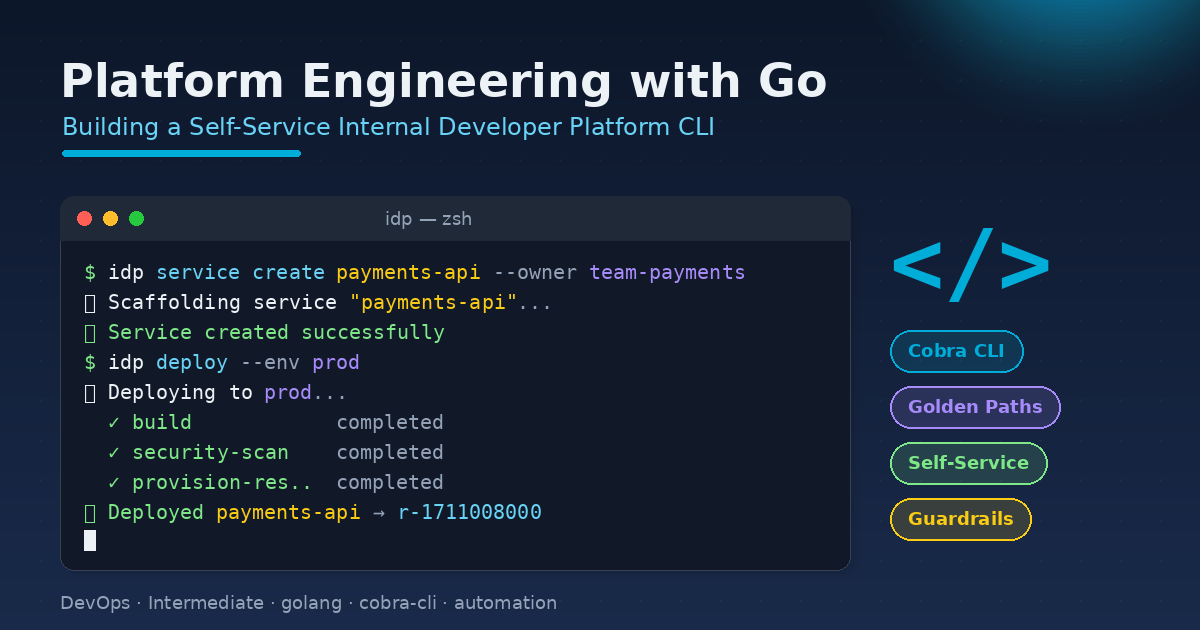
Platform Engineering with Go: Building a Self-Service Internal Developer Platform CLI

Platform Engineering with Go: Building a Self-Service Internal Developer Platform CLI

Bogdan Ungureanu

Platform engineering has emerged as the natural evolution of DevOps, addressing a critical problem that plagues growing engineering organizations: cognitive overload. As infrastructure complexity explodes—Kubernetes, Terraform, CI/CD pipelines, observability stacks, secrets management—developers increasingly spend time fighting tooling instead of shipping features.

The solution is an Internal Developer Platform (IDP): a curated, self-service layer that abstracts away infrastructure complexity and provides developers with “golden paths” to production. At the heart of many successful IDPs sits a command-line interface (CLI) that developers use daily to scaffold services, provision resources, and deploy applications.

In this guide, you’ll build a production-grade IDP CLI in Go using the Cobra framework. Go is the de facto language for platform tooling—it powers Kubernetes, Docker, Terraform, and countless cloud-native tools—thanks to its single-binary distribution, excellent concurrency, and robust standard library.

GitOps Workflows: Automating Kubernetes Deployments with ArgoCD

GitOps Workflows: Automating Kubernetes Deployments with ArgoCD

Bogdan Ungureanu
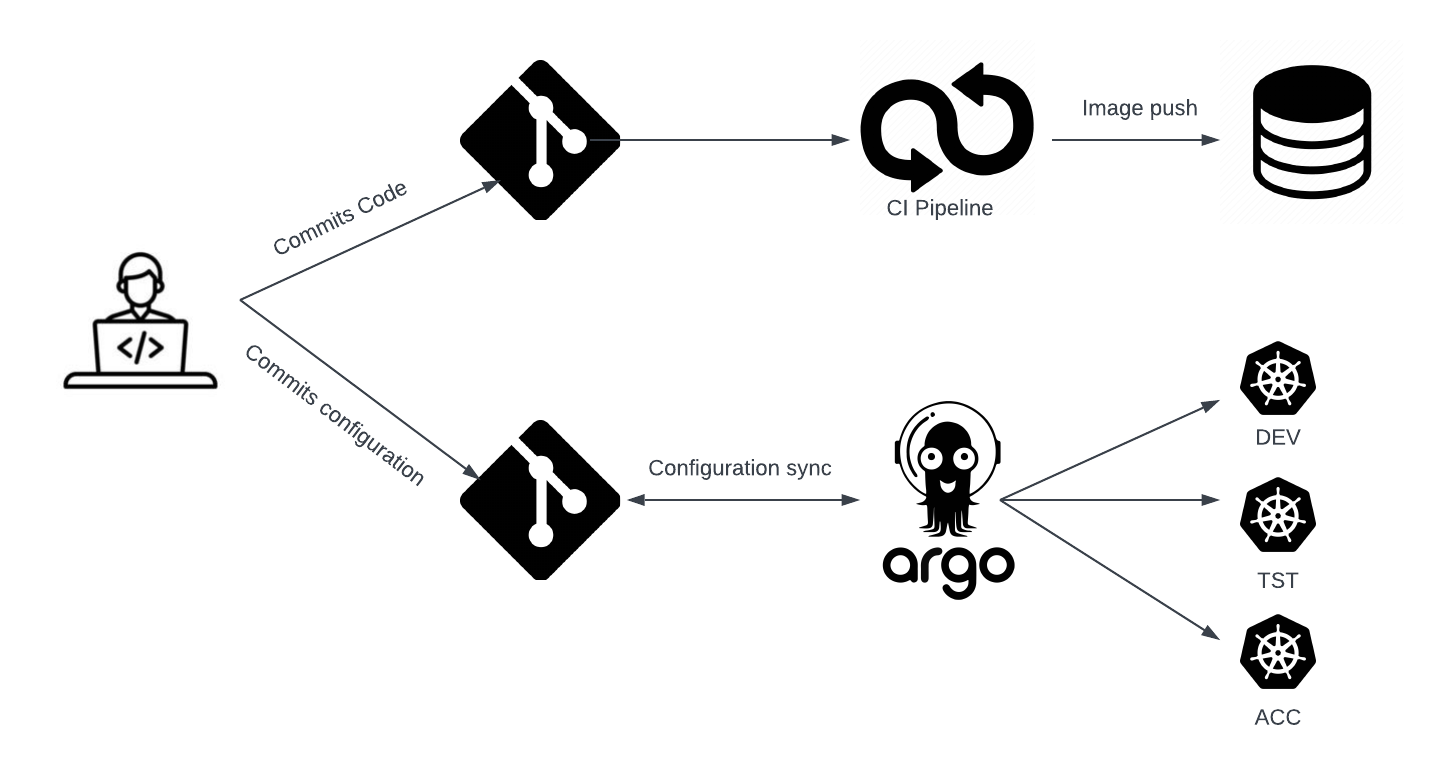
In today’s fast-paced software development landscape, the ability to deploy applications quickly, reliably, and consistently has become a critical competitive advantage. Traditional deployment methods often involve manual processes, imperative commands, and fragmented toolchains that can lead to configuration drift, deployment failures, and security vulnerabilities. This is where GitOps emerges as a transformative approach, treating Git repositories as the single source of truth for both application code and infrastructure configuration. GitOps represents a paradigm shift in how we think about continuous deployment and infrastructure management.
Zero-Encapsulation Kubernetes Networking: Calico BGP with ToR Switch Integration

Zero-Encapsulation Kubernetes Networking: Calico BGP with ToR Switch Integration

Bogdan Ungureanu
In the world of high-performance Kubernetes deployments, network overhead can become a significant bottleneck. Traditional overlay networks like VXLAN or IPIP add encapsulation layers that consume CPU cycles, introduce latency, and reduce overall throughput. For organizations running latency-sensitive applications or high-bandwidth workloads, every microsecond and every bit of throughput matters. This is where zero-encapsulation networking with Calico BGP and Top-of-Rack (ToR) switch integration becomes a game-changer. Calico’s BGP mode eliminates overlay network overhead entirely by leveraging the Border Gateway Protocol to announce pod and node IP addresses directly to your network infrastructure.
Connecting Dell Unity XT to Kubernetes with CSI-Unity on Bare-Metal

Connecting Dell Unity XT to Kubernetes with CSI-Unity on Bare-Metal

Bogdan Ungureanu
The Dell Container Storage Interface (CSI) Driver for Unity XT enables Kubernetes clusters to provision and manage storage volumes from Dell Unity XT arrays. This guide provides a comprehensive walkthrough for deploying CSI-Unity on a bare-metal Kubernetes cluster running Ubuntu 24.04, including multipath configuration and troubleshooting strategies. Prerequisites Kubernetes cluster (version 1.27+) running on Ubuntu 24.04 Dell Unity XT storage array with: Management IP address accessible from Kubernetes nodes iSCSI or Fibre Channel connectivity configured Storage pools created and available Administrative access to Kubernetes cluster and Unity XT array Helm 3.