
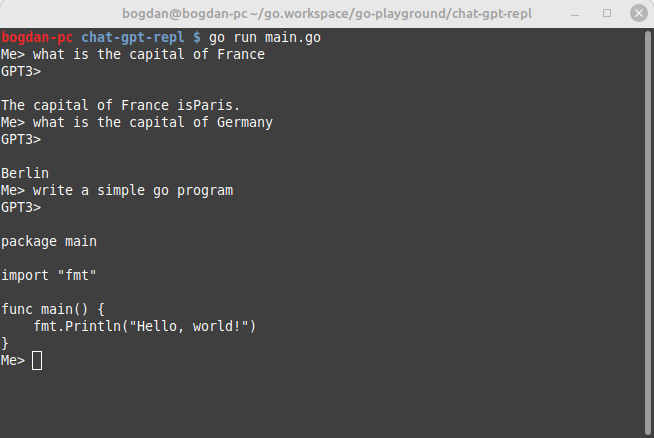
Write a REPL using GPT-3 and Go
This blog post will discuss how to use the OpenAI Chat API in Golang. For this purpose we will create a simple REPL (Read-Eval-Print-Loop) that will use the GPT-3 API to generate the responses.
This blog post will discuss how to use the OpenAI Chat API in Golang. For this purpose we will create a simple REPL (Read-Eval-Print-Loop) that will use the GPT-3 API to generate the responses.
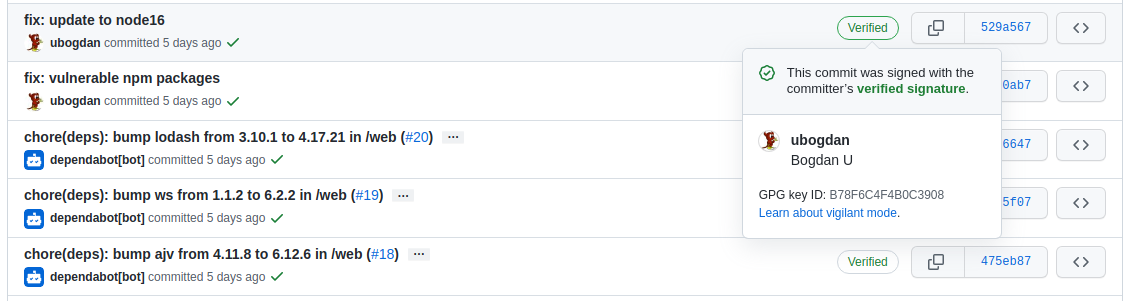
Even if you don’t know about signed Git commits, you might have seen this on GitHub:
No matter if you are creating a simple REST service or a complex one, you will need to handle panics to provide good resiliency and stability. Without panic recovery mechanisms in place, an uncaught panic in your HTTP handler will crash your entire server, leaving your clients without service and no meaningful error response.
Businesses use the SOCKS5 proxy all of the time, mostly for security purposes. Since security is a major point of any data-driven organization, including a SOCKS5 proxy could significantly ramp up the digital security of the company’s data.
Besides securing their data, it can restrict access to particular digital services through advanced authentication, which is completely optional and comes as a courtesy of SOCKS5.
Request-based tracing provides a way to determine what exactly is happening with your requests and why.
It is handy when you want to reproduce and understand the problem that you are experiencing.
If you’re running a HTTP server and want to rate limit user requests, and most of the frameworks are providing their own middleware.
But if you want something simple and lightweight – or just want to learn – it’s not too difficult to roll your own middleware to handle rate limiting.